False Friends: The Words That Will Get You in Trouble Abroad
2026-08-14
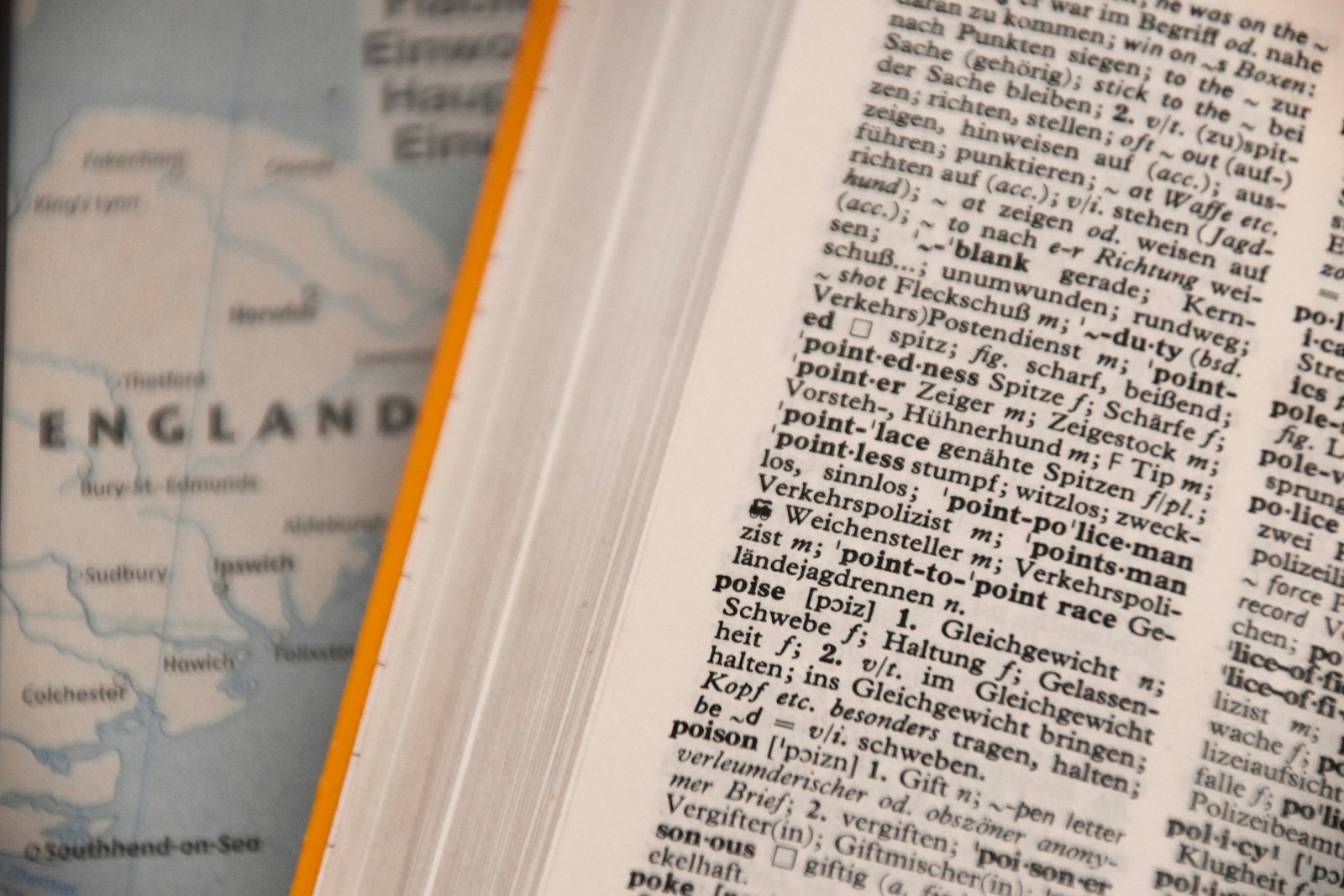
Order a Gift in Germany and you've asked for poison, not a present. Tell someone you're embarazada in Spanish and you've announced a pregnancy, not embarrassment. Expect an Italian dish described as caldo to arrive cold, and you'll get something hot enough to scald you — which is fitting, because "scald" and caldo really do come from the same Latin word.
These are false friends: words that look like English, sound like English, and mean something else entirely. Some are genuine relatives that drifted apart after their languages split. Others are pure coincidence — unrelated words from unrelated roots that happen to have landed on the same spelling. Either way, they're dangerous for the same reason. A word you've never seen, you look up. A word that looks exactly like one you already know, you trust — right up until it embarrasses you in front of a room full of strangers.
Below are the false friends most likely to trip up an English speaker, organized by language, with the story of how each one got that way.
French: words English borrowed, then bent
French and English share thousands of words — the Norman Conquest saw to that — which is exactly why French false friends are so convincing. Often the spelling never changed; only the meaning did.
| Word | Looks like | Actually means |
|---|---|---|
| Librairie | library | Bookshop — a library is une bibliothèque |
| Coin | coin (money) | Corner — money is une pièce |
| Blesser | bless | To wound or injure |
| Pain | pain (hurt) | Bread — hurt is la douleur |
Librairie catches the most travelers off guard, because the mistake is invisible — you can wander into a French bookshop looking for a library card and never work out why the clerk looks confused. Both words trace back to Latin liber, "book," but French kept the word for the place you buy books while English took it for the place you borrow them.
Blesser is the stranger case, and it runs in the opposite direction from what you'd guess. It has no connection to the English "bless" — it descends from a Frankish word meaning "to bruise." Meanwhile the English word is the one with blood in its past: "bless" comes from Old English blētsian, from a root meaning to mark or consecrate with blood, from the practice of sprinkling pagan altars. So the peaceful-looking English word carries the violent history, and the violent-sounding French one just means bruising.
Spanish: the classics
Spanish produces some of the most famous false friends in language-learning lore — the kind that end up in every "don't say this in Spanish" listicle, for good reason.
| Word | Looks like | Actually means |
|---|---|---|
| Embarazada | embarrassed | Pregnant |
| Constipado | constipated | Having a head cold |
| Éxito | exit | Success |
| Once | once (one time) | Eleven |
| Sopa | soap | Soup |
| Ropa | rope | Clothes |
| Vaso | vase | A drinking glass |
Embarazada gets repeated most often because the failure mode is so specific and so social: an English speaker reaching for "I'm embarrassed" instead announces a pregnancy. The genuinely useful word, avergonzado/a, looks like nothing in English — which is exactly why nobody reaches for it under pressure. Constipado pulls the same trick on a subject nobody wants to get wrong at a pharmacy counter: it means you have a head cold.
Then there's the domestic trio. Sopa is soup, not soap. Ropa is clothes, not rope. Vaso is the glass you drink from, not the one you put flowers in. Each one is a near-miss on an everyday object, which is precisely why they survive so long in a learner's vocabulary — the sentence still makes a kind of sense, so nobody corrects you.
German: the everyday ambushes
German rewards literal thinking almost everywhere — except in exactly the words that look most familiar to an English speaker.
| Word | Looks like | Actually means |
|---|---|---|
| Gift | gift (present) | Poison |
| Rat | rat (rodent) | Advice, counsel |
| Mist | mist (fog) | Manure |
| Bekommen | become | To receive, to get |
| Handy | handy (useful) | A mobile phone |
Gift is the headline example, and the real story is better than the joke. It genuinely is the same Germanic word as English "gift," from a root meaning "to give." What changed it was Greek: the word δόσις (dósis) meant both "a gift" and "a dose of medicine," and Latin borrowed it as dosis. German Gift absorbed that second sense, drifted toward "a dose" and then toward "a deadly dose," and eventually lost the innocent meaning altogether. A present is now ein Geschenk.
Except the old meaning didn't vanish completely — it's fossilized in Mitgift, the German word for a dowry. Literally "with-gift": the gift that comes with the bride. The original sense is still sitting there in plain sight, one compound word away from the poison.
Rat has a fossil of its own. Notice Rathaus — town hall — in the center of every German town: not a rodent infestation but a "house of counsel," because Rat has meant advice since Old High German and never once meant rodent. (The animal is eine Ratte.)
Bekommen causes the most cheerful real-world mix-ups. Say ich bekomme ein Steak in a restaurant and you haven't announced a transformation — you've simply asked to receive a steak. And Handy is the odd one out entirely: not a drifted cognate but a pseudo-anglicism, a German coinage that only sounds English. Where exactly it came from is genuinely disputed — theories point variously to Motorola's wartime "Handie-Talkie," to the German Handfunktelefon, and to CB-radio slang — but all agree on the important part: it never meant "convenient," and no English speaker ever called a phone a handy.
Italian: opposites and near-misses
Italian's false friends tend to land on the opposite meaning of the English word, or one letter away from it. Both are more disorienting than a word that means something merely unrelated.
| Word | Looks like | Actually means |
|---|---|---|
| Caldo | cold | Hot |
| Fame | fame | Hunger |
| Camera | camera | Room |
| Bravo | brave | Good, skilled, well-behaved |
| Morbido | morbid | Soft, gentle |
Caldo is the purest inversion on this list — from Latin calidus, "warm," it means the exact opposite of the English word it resembles. And English speakers already know the root without realizing it: calidus is where scald, cauldron, and calorie all come from. The heat was always hiding in your own vocabulary; it just never attached to the word "cold."
Fame is one letter from its real cognate. Italian fama means renown, exactly like English "fame" — but fame, no second a, means hunger, from Latin fames. Say ho fame and you're announcing you're hungry, not famous.
Camera resolves the moment you remember what a camera was named after: the camera obscura, the "dark room" that the photographic camera descends from. Italian simply kept the room. English kept the box.
The Nordic surprise round
Some Scandinavian false friends have become minor legends among English speakers living in the Nordics — and the best one doesn't involve English at all.
| Word | Language | Watch out for | Actually means |
|---|---|---|---|
| Fart | Swedish | the obvious | Speed — full fart = full speed ahead |
| Bra | Swedish | bra (undergarment) | Good — det är bra = that's good |
| Glass | Swedish | glass (vessel) | Ice cream — the vessel is ett glas |
| Full | Norwegian | full (not empty) | Drunk |
| Rolig | Norwegian | Swedish rolig | Calm — but in Swedish it means funny |
Swedish fart is entirely respectable, from Old Norse ferð, "journey" — it's English that took the same-looking sequence of letters somewhere less dignified. Norwegian full is the one with real social stakes: at a Norwegian dinner table, announcing you're full reports on your drinking, not your appetite.
But rolig is the best entry on this whole list, because it's a false friend between two languages that aren't English. Norwegian, Danish and Swedish all built the word from the same Old Norse root ró, meaning "peace, rest." Norwegian and Danish kept the original sense: calm, quiet. Swedish drifted through "pleasant" and landed on "funny." Same root, two neighboring languages, nearly opposite modern meanings.
And Swedish still carries the original meaning around as a fossil, in the set phrase lugn och ro — "peace and quiet." The old sense survives inside the idiom even though the standalone word has moved on. Exactly like Mitgift keeping the innocent version of Gift alive.
Why these words exist at all
False friends come from two very different places, and the difference is worth knowing.
Some are real relatives that drifted. Gift, librairie, camera, and Rat each share a genuine ancestor with their English look-alike; the words simply wandered in different directions after the languages parted. These ones have a story, and the story is usually recoverable — often still visible in a compound or a set phrase, like Mitgift, Rathaus, or lugn och ro.
Others are pure coincidence. French blesser and English "bless" descend from entirely separate roots. Swedish fart and English "fart" have nothing to do with each other. Spanish once comes from Latin undecim, "eleven," and matches the English word letter-for-letter by sheer accident. Italian caldo and English "cold" trace to different Indo-European roots and mean opposite things. There's no hidden logic to decode in these — two languages with large vocabularies will inevitably collide on some spellings.
And sometimes the answer is genuinely unsettled. German Mist (manure) and English mist (fog) are usually treated as separate Proto-Germanic words, but the roots proposed for them sit uncomfortably close together, and etymologists don't fully agree on whether the resemblance is coincidence or a very old family connection. Not every case has a clean answer.
For a language learner, though, the practical lesson doesn't depend on which category a word falls into: the words that feel safest — because you already "know" them — are exactly the ones worth checking first.
Keep exploring
Every false friend above has its own page with the full meaning and origin. Four languages have entire collections of their own:
French false friends · Spanish false friends · German false friends · Italian false friends
Or browse the full false friends collection — every deceptive look-alike in the set, across French, Spanish, German, Italian, Dutch, Portuguese, Swedish, Norwegian, and Russian.
Loading the full interactive collection…